

Shop


apparel



BUILDING BEAUTY
There’s a great deal of parallel in the process of creating visual art, whether it’s for a wall or a wardrobe.
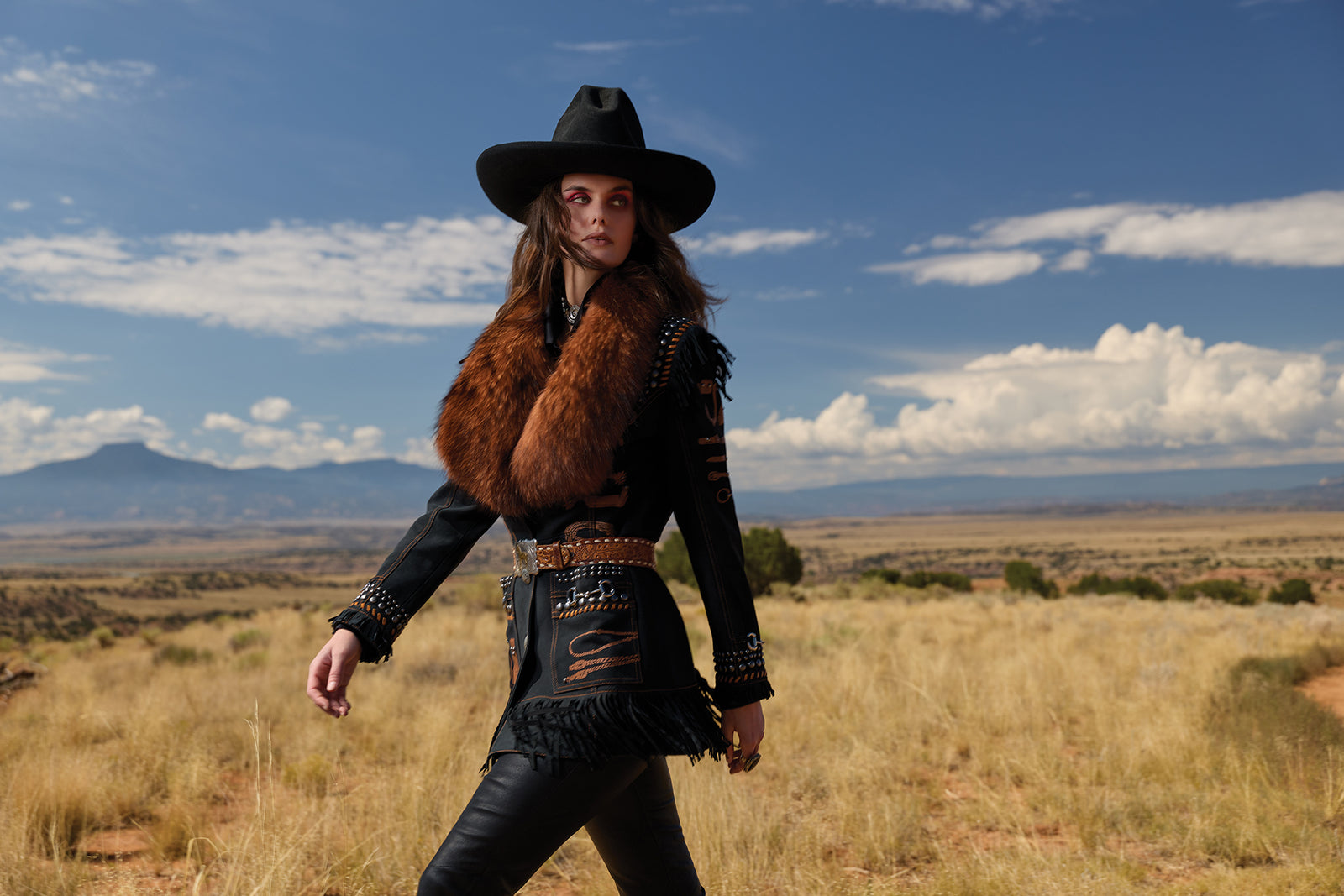
“I’ve been taught to photograph from the back forward, to build your layers,” Maura explained. “For me, the first layer is usually sky, then clouds, then often mountains or a rodeo arena – there might be some space and dirt – and then, the star of the show. But, I don’t think of the background as a supporting character; I think of it as a fundamental layer. Similar to the way I imagine [the Double D] team designs clothing.”
We’ve never really thought about it in those terms, but she’s right. Sometimes it’s a small artistic element, like an image or a print, and we build a whole piece (or even a collection) around it. Sometimes it’s a silhouette we want to reinvent – like this Tucker’s Tack Jacket – and we start there, building on it with artwork and embellishments. Either way, every layer is integral to the outcome – no supporting characters, just building blocks.
Leave a comment
Comments will be approved before showing up.